SADASC '26
Marrakech, Morocco — 29–31 January 2026

The International Conference on Smart Applications and Data Analysis for Smart Cyber-Physical Systems

Important Dates

Paper Submission Deadline
13 October 2025
Acceptance Notification
7 November 2025
Camera Ready Papers
15 November 2025
Early Bird Registration
9 November 2025
Conference Affiche

Submit your paper here: Openreview.net.

Detailed instructions can be found in the guidelines available at the following link: — follow the Guidelines.

Please download and sign the copyright form from the following link: — follow the Cooperate.

Posters should be submitted via this e-mail: posters@sadasc.com — follow the Template.

The Sixth International Conference on Smart Applications and Data Analysis for Smart Cyber-Physical Systems (SADASC'26)

Co-organized by CCPS laboratory and Hassan II University of Casablanca
aocsi ccps h2 ensam springer scopus dblp

About SADASC'26

will be held during January 29-31, 2026 in Marrakech, Morocco. SADASC'26 will bring together researchers and industry professionals contributing towards different phases of designing, exploiting and maintaining Smart Cyber Physical Systems and their Applications. These phases include requirements engineering, data acquisition/cleaning, storage, deployment, exploitation, and visualization. Designing these systems also also has to consider issues such as ethics, security and privacy. CCPS'2026 follows the success of the Agadir (2016), Casablanca (2018), Marrakech (2020), Marrakech (2022) and Tangier (2024)

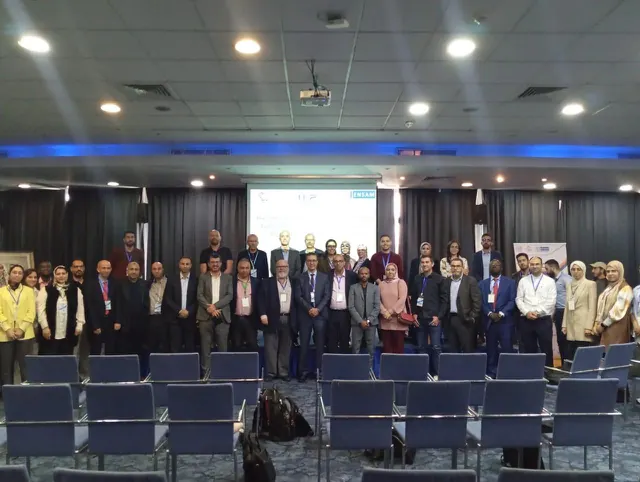
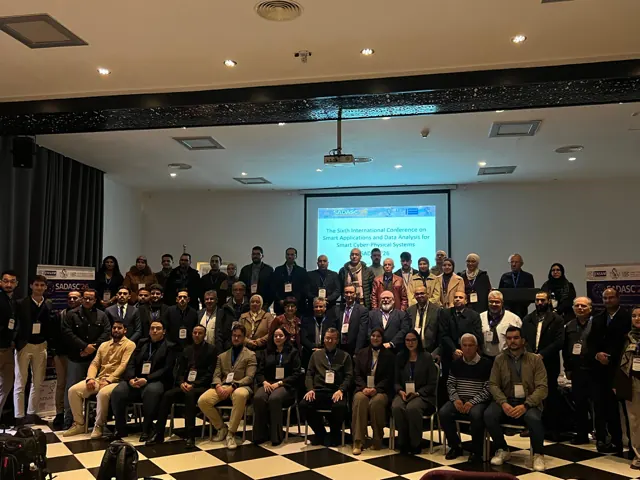
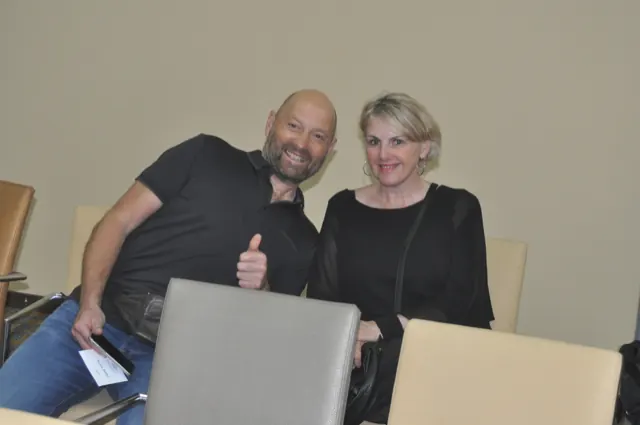
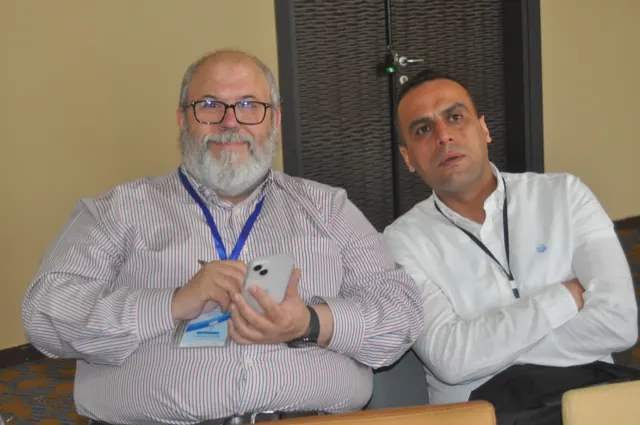
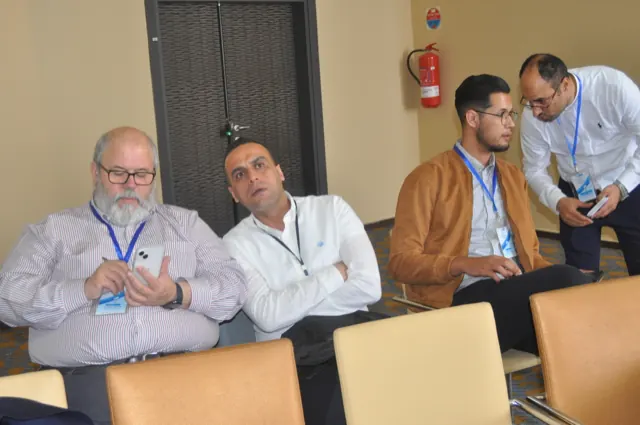
Conference Memories

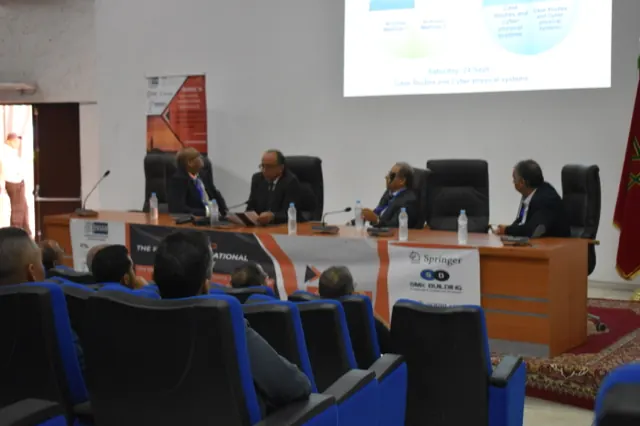
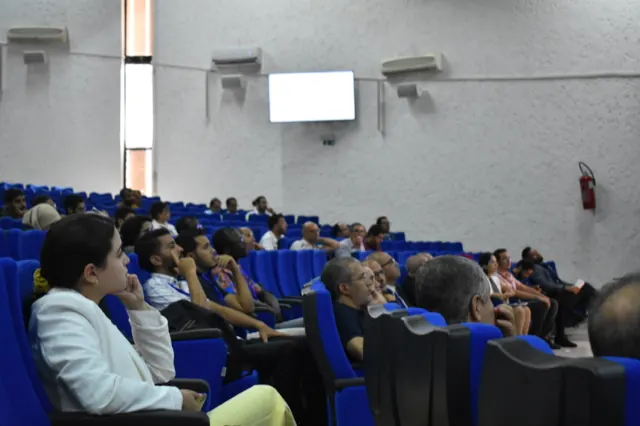
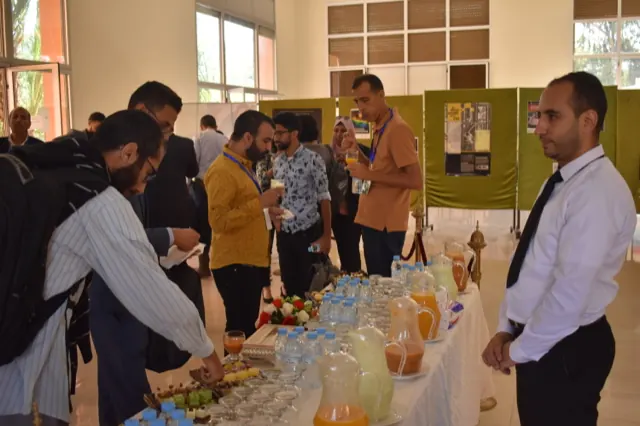
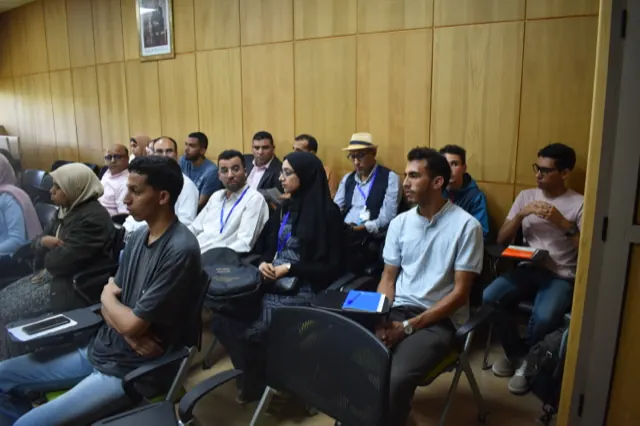
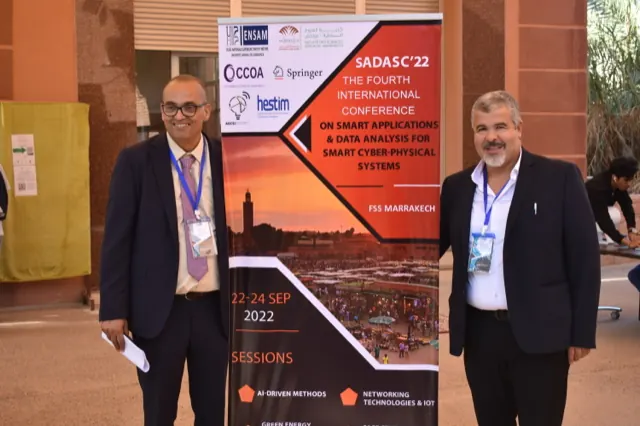
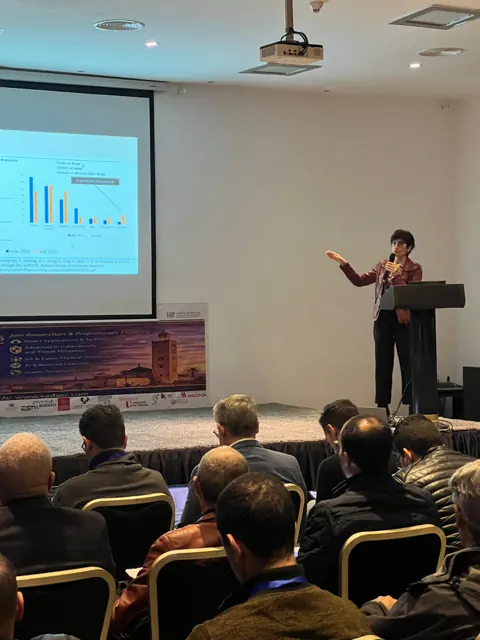
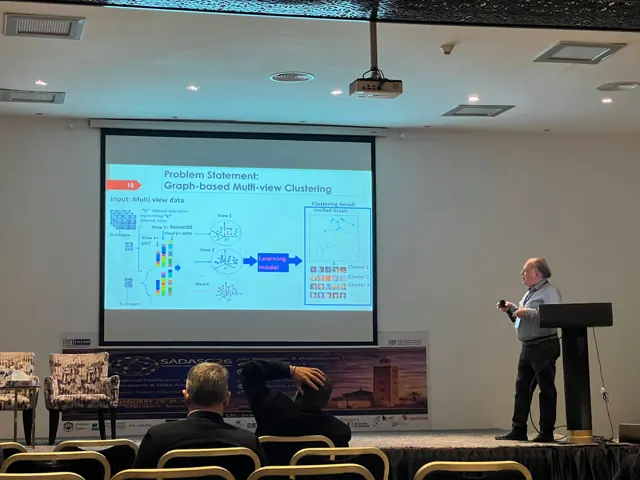
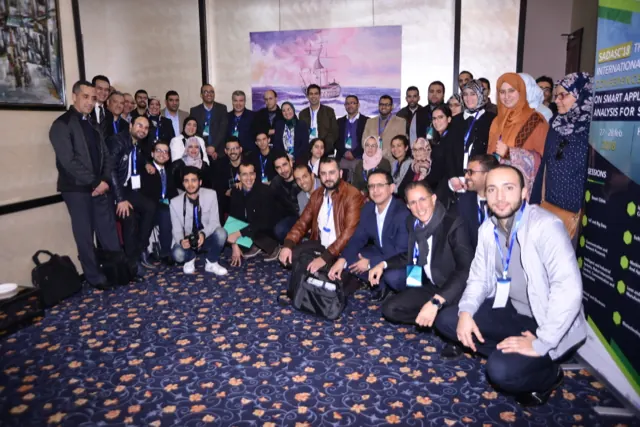
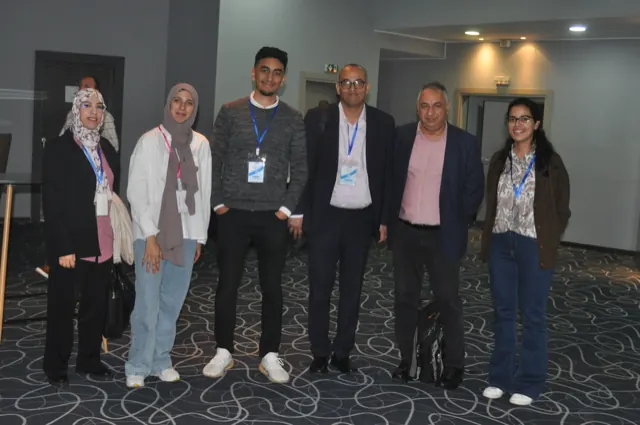
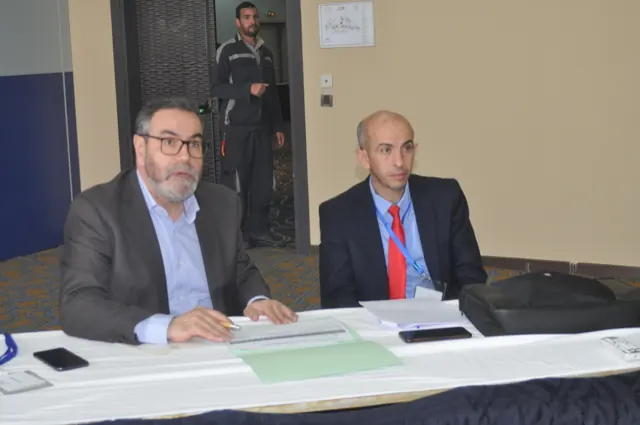
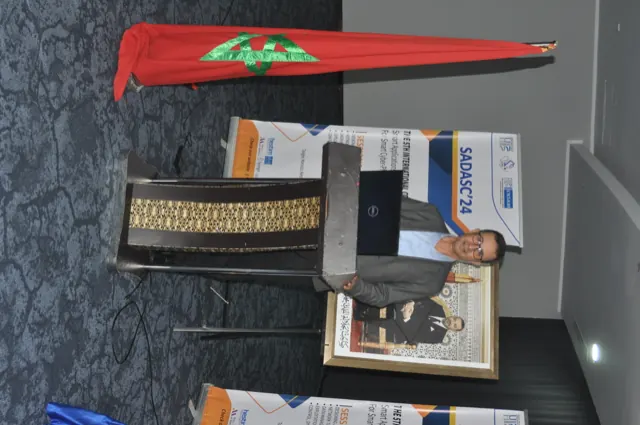
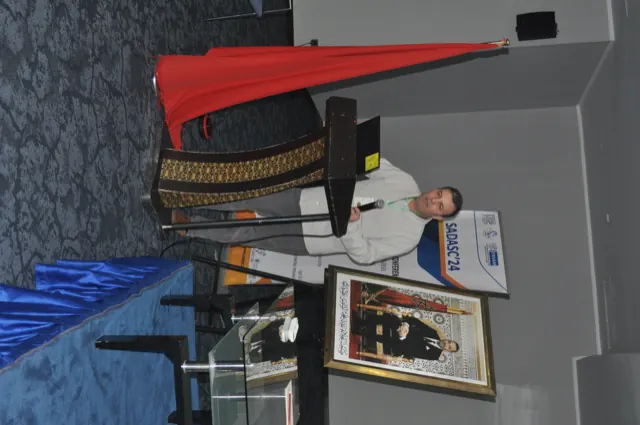
Highlights from previous SADASC conferences

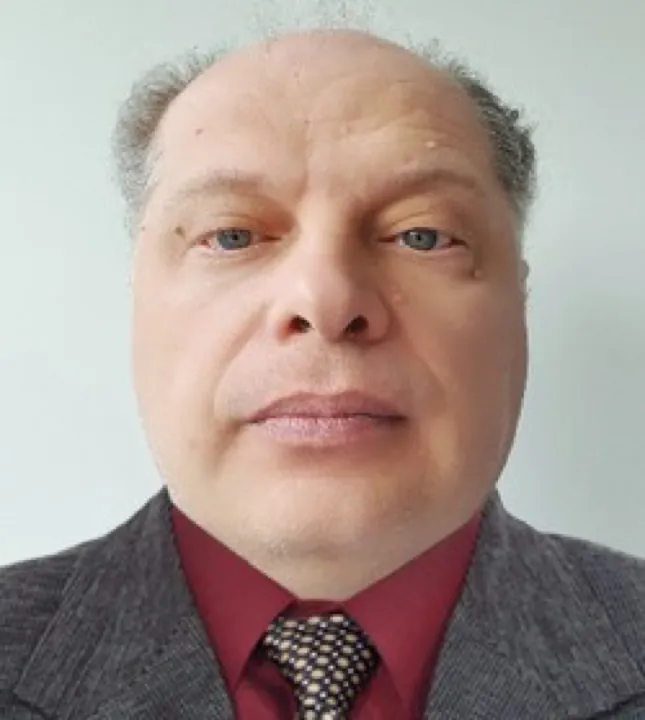
In Loving Memory of Professor Chris Marouane

SADASC'26 is dedicated to Professor Chriss Marouane, Agrégé in Electrical Engineering and brilliant computer scientist

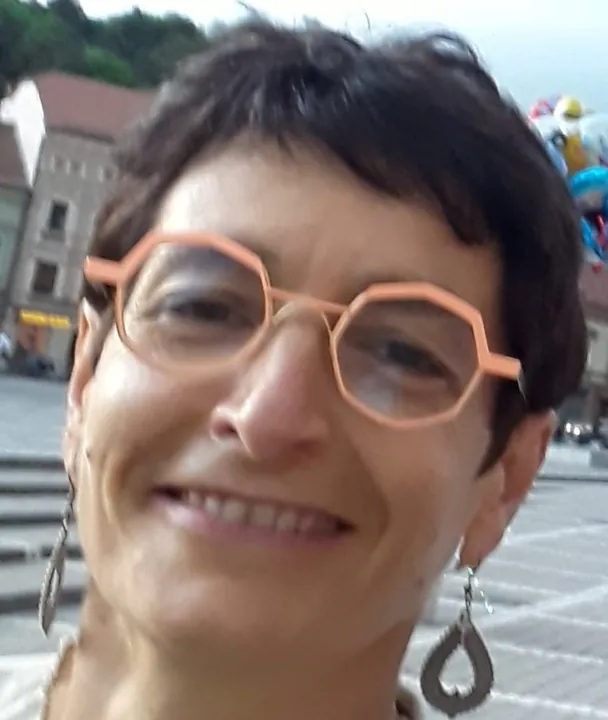
Portrait du Professeur Marouane CHRISS

Prof. Marouane CHRIS

Professeur Agrégé Casablanca

"A good Professor does not just shape minds; he lights paths that will continue to shine long after his departure."

It is with profound sadness that we dedicate SADASC'26 to the memory of Professor Chris Marouane, Agrégé in Electrical Engineering and esteemed computer scientist, who passed away in 2025.

A cornerstone of our community, Professor Marouane was a principal architect behind the success of previous SADASC editions. His visionary leadership, unwavering dedication to advancing AI, electrical engineering, and digital innovation, and tireless commitment to fostering academic excellence will forever inspire us.

We invite you to join us in celebrating his enduring legacy at SADASC'26.

Conference Tracks & Topics

All accepted papers will be published in CCIS, Springer and indexed in Scopus.

Track 1: Designing and modeling Smart Applications and Cyber-Physical Systems

  • Development lifecycle management
  • Eco- systems Cyber-Physical Systems
  • Simulation of Applications and Cyber-Physical Systems
  • Requirement Engineering for applications and cyber-physical systems
  • Multi-paradigm modeling and methodologies in cyber physical systems
  • Software Engineering for cyber-physical systems
  • Stakeholders, barriers and requirements for cyber-physical systems
  • Human in the loop in cyber-physical systems
  • Control and Optimization for cyber-physical systems
  • Dependability in cyber-physical systems (real-time, reliability, availability, safety, security)

Track 2: Network technologies & IOT

Session chairs: Mohamed Bousmah & Zakaria Hamidi Alaoui

  • New platforms and hardware designs for networked sensor systems
  • Systems software, including operating systems and network stacks
  • Low power operation, energy harvesting, and energy management
  • New communication paradigms for ubiquitous connectivity
  • Mobile and pervasive systems, including personal wearable devices, drones and robots
  • Sensing, actuation, and control
  • Heterogeneous collaborative sensing
  • Fault-tolerance, reliability, and verification
  • 5G wireless
  • Routing, scheduling, resource allocation, spectrum sharing
  • Network optimization and learning
  • Sensor-oriented data modeling
  • Network protocols, coverage, connectivity, and longevity
  • Simulation tools and environments
  • In-network processing and aggregation
  • Foundations of sensor networks
  • Vehicular Communication Design

Track 3: Data management

  • Data acquisition, storage and infrastructures
  • Data conversion and data supervision
  • Heterogeneity of Devices for Data Collection
  • Big Data
  • Parallel Databases/NoSQL solutions/in-memory databases and graphs databases
  • Data Integration, cleaning, transforming and fusing
  • Data compression and summarization
  • Data quality, veracity and uncertainty
  • Data Lakes and data warehouses
  • Data Heterogeneity Management
  • Ontologies
  • Data Collection Workflows
  • Meta-data
  • Value Capturing
  • Norms and Standards
  • Cloud/Cluster/Distributed computing for data management
  • Main Memory Databases
  • Indexing
  • Data partitioning/Allocation/Load Balancing
  • Value Capturing
  • Norms and Standards
  • Data Compression/Summarization
  • Cloud/Cluster Computing
  • Main Memory Databases
  • Indexing
  • Co-processing of data (CPU, GPU, FPGA, etc.)
  • Polystore Deployment
  • Data partitioning/Allocation/Load Balancing
  • Data algorithms and data structures on modern hardware
  • Hardware systems for query processing
  • Benchmarks

Track 4: Exploitation and Exploration

  • Programming Models/Environments for Cluster/Cloud Computing
  • Parallel Databases/NoSQL solutions/in-memory databases
  • Open Sources for data management
  • Data Analysis/Visualization
  • Non-functional Requirement Satisfaction (ethics, pricing, legal, cultural, and economic principles and regulations)
  • Green Computing
  • Recommendation Systems
  • Security, privacy and trust
  • Blockchains
  • Prediction Modeling
  • Machine Learning/Deep Learning
  • Exploratory Data Analysis
  • Economical Models for Smart applications/systems

Track 5: Green Communications, Computing and Technologies

  • Green and sustainable computing
  • Energy-efficient computing and supercomputing
  • Intelligent signal processing for green communications
  • Green cloud computing and IoT
  • Energy harvesting and energy efficiency in communications
  • Green vehicles, homes, buildings and industries
  • Green data storage
  • Privacy, safety, and security in green-aware systems

Track 6: Modeling & Control of Intelligent Systems

Session chairs: N. Rabbah & M. Ouartassi

  1. Modeling and simulation for industry 4.0;
  2. Machine learning and advanced modeling;
  3. Stochastic modeling and uncertainty management;
  4. Decentralized and collaborative control of multi-agent and IoT systems;
  5. Predictive and optimal control in uncertain environments;
  6. Advanced control based on AI and nonlinear methods;

Track 7: Case studies

Session chairs: B. Kissi & H. Khatib

  • Predictive maintenance
  • Industry 4.0 (system interconnection, information transparency, technical assistance)
  • Cognitive computing in real-applications: education, healthcare, etc.
  • Smart farming
  • Agricultural intelligence
  • Market intelligence

Track 8: Energy Efficiency and Environmental Security: Innovative Technologies for Resilient and Sustainable Networks.

Session chairs: A. Touati & A. El Afia

  1. Hydrogen Energy: Production, Storage, and Utilization for Decarbonizing Energy Systems and Sector Integration.
  2. Smart Grid Technologies for Sustainable Energy Production;
  3. Electric Vehicles (EVs): Advancements in EV Charging Infrastructure, Vehicle-to-Grid (V2G) Technologies, and Their Role as Mobile Energy Assets in Modern Power Systems.
  4. Energy Storage Systems: Advancements in battery technologies, thermal storage, and innovative energy storage solutions for balancing power supply and demand;
  5. Artificial Intelligence applications in water resources and environmental engineering;
  6. Advances in Water Desalination Technologies for Effective Water Stress Management.

Track 9: Artificial General Intelligence and Agentic AI.

Session chair: Mohamed Tabaa

  1. Large Language Models (LLMs).
  2. Agentic AI applications;
  3. Multi Agent Systems;
  4. AI powered XAR Applications;
  5. Blockchain and AI;
  6. Risks and Ethical challenges of AI.
  7. Governance challenges of AI.

Track 10: Physics of Materials

Session chairs: Haddou El Ghazi & Mohamed Moutchou

  • Materials engineering for energy,
  • Bulk and Nanomaterials processing
  • Artificial Intelligence for Materials,
  • Power systems and thermal engineering;
  • Photonics and Lasers,
  • Linear and Nonlinear Optical Materials properties,
  • Energy Efficiency, Storage, Conversion and Harvesting,
  • Materials Characterization,
  • Other areas of interest associated with engineering and materials science where a multidisciplinary approach is required.

Keynote Speakers

Distinguished experts sharing their insights

José María Luna

José María Luna

Associate Professor of Computing and Artificial Intelligence, University of Cordoba, Spain

Talk: Unlocking insights: Pattern Mining in Time Series.

Abstract: Pattern mining in time series data involves discovering hidden patterns that provide meaningful insights related to trends, relationships, seasonality, anomalies, and more. These patterns transform complex and hardly understandable data into a sequence of labelled events/patterns that comprise the time series and simply subsequent analysis of the data. This daunting process, far more complex than traditional pattern mining techniques on static data, includes the locating of undefined patterns in time series through motif discovery methods. The effective discovery of such undefined patterns is key to providing convincing explanations of the time series behaviour in many different fields, such as industry, health, etc. This talk aims to present works dealing with pattern mining in time series and its utility on a variety of fields. Biography: José María Luna graduated in Computer Science with honours at the University of Córdoba (Spain) in 2009. He received his PhD with a grade of summa cum laude in Computer Science from the University of Granada in January 2014. Over his career as a researcher, Dr Luna has done multiple research stays at the Eindhoven University of Technology (TU/e) to work on pattern mining. Dr Luna has participated in 8 national/regional projects (Spain) and 1 European project. He has always focused his research studies on pattern mining through Computational Intelligence techniques. Since the beginning of his career, he has published more than 80 indexed papers in Scopus, 45 of them in top ranked journals. Dr Luna is also editor of 3 books in Pattern Mining.

Fadi Dornaika

Fadi Dornaika

Research Professor at Ikerbasque, Bilbao, Spain, and the University of the Basque Country UPV/EHU, San Sebastian, Spain.

Talk: Advances in Graph-Based Multi-view Learning and Medical Image Analysis.

Abstract: In this talk, I will present two key research topics from my recent work: Graph Neural Networks (GNNs) for semi-supervised and unsupervised learning and advanced deep learning techniques for medical image analysis. Multi-view learning has emerged as a powerful paradigm for enhancing machine learning models by leveraging complementary information from multiple data views, leading to improved performance and robustness. Within this framework, I will discuss several graph-based solutions, including both shallow and deep learning models, designed to tackle key challenges in multi-view learning. In the second part of the talk, I will highlight some recent contributions to medical image analysis, focusing on: 1. A plug-and-play, model-agnostic data augmentation strategy to enhance medical image segmentation. 2. Angular margin-based softmax loss functions for improving classification performance in medical imaging. 3. Deep learning approaches for infection severity assessment in lung X-ray and CT scans. Biography Fadi Dornaika, an Ikerbasque Research Professor, has a distinguished academic and research career. He earned his Ph.D. from INRIA, France, in 1995, focusing on geometric modeling for vision and robotics. Before joining IKERBASQUE, he held various research positions in Europe, China, and Canada. His expertise spans computer vision, image processing, pattern recognition, and machine learning, with a focus on Multiview Clustering, Structured Semi-Supervised Learning, and Deep Learning for medical image analysis. He ranks in the top 2% of scholars in Stanford University's 2024 ranking (DOI:10.17632/btchxktzyw.7). He has published over 400 papers, including 190 indexed journal articles, in computer vision, pattern recognition, and machine learning. He has supervised many graduate students in computer science and information technology. He has supervised 15 PhD students.

Helen Karatza

Helen Karatza

Professor Emeritus, Department of Informatics, Aristotle University of Thessaloniki, Greece

Talk: Cloud, Fog and Mist Computing Collaboration for Efficient Scheduling of Real-Time Applications.

Cloud, Fog and Mist Computing Collaboration for Efficient Scheduling of Real-Time Applications, Current Status and Research Trends Abstract: The rapid growth of Internet of Things (IoT) applications has made traditional cloud computing inadequate for handling the massive data volumes generated by IoT sensors and devices. To address this challenge, Fog and Mist computing paradigms have emerged to reduce transmission latency. Fog computing extends cloud capabilities to the network edge, closer to data sources, thereby meeting low-latency demands. Mist computing, a more lightweight version of fog computing, takes this a step further by positioning computational resources even closer to the IoT layer, minimizing latency even more. Given the near real-time nature of most IoT applications and their strict deadline requirements, implementing efficient scheduling algorithms is critical for ensuring timely execution of workloads and optimizing the performance of cloud, fog, and mist computing systems. This keynote talk will present innovative approaches for tackling resource allocation and task scheduling challenges in real-time applications across cloud, fog, and mist computing environments, while also exploring emerging trends and future research directions in the field. Helen Karatza (senior member of IEEE, ACM, SCS) is a Professor Emeritus in the Department of Informatics at the Aristotle University of Thessaloniki, Greece. Dr. Karatza's research interests include cloud, fog and mist computing, energy efficiency, fault tolerance, resource allocation, scheduling algorithms and real-time distributed systems. Dr. Karatza has authored or co-authored over 260 technical papers and book chapters including seven papers that earned best paper awards at international conferences. She served as an elected member of the Board of Directors at Large of the Society for Modeling and Simulation International. She served as chair and keynote speaker in international conferences. Dr. Karatza is Senior Associate Editor of the Elsevier journal “Simulation Modelling Practice and Theory”, an Editor of “Future Generation Computer Systems” of Elsevier, an Associate Editor of IEEE Transactions on Services Computing and an Editorial Board member of Cluster Computing of Springer. She was Editor-in-Chief of the Elsevier journal “Simulation Modelling Practice and Theory”, Editor-in-Chief of “Simulation Transactions of The Society for Modeling and Simulation International”, Associate Editor of “ACM Transactions on Modeling and Computer Simulation” and Senior Associate Editor of the “Journal of Systems and Software” of Elsevier. She served as Guest Editor of multiple Special Issues in international journals. More info about her activities and publications can be found at: https://karatza.webpages.auth.gr/

Josiane Mothe

Josiane Mothe

Professor in Computer Science at the University of Toulouse and researcher at IRIT

Talk: LLM applications and low resource languages.

LLM applications and low resource languages Bio: Josiane Mothe is a Professor in Computer Science at the University of Toulouse and a researcher at IRIT (Institut de Recherche en Informatique de Toulouse). Her expertise includes Information Retrieval, Query Performance Prediction, and data driven artificial intelligence. She has coordinated and participated in multiple interdisciplinary research projects, including the IA4Agri and O3T projects, focusing on integrating AI solutions into domains such as sustainable agriculture and multimodal information processing. Her recent research emphasizes Query Performance Prediction as well as low resource languages in the era of Large Language Models, combining theoretical insights with practical applications in information systems. Josiane collaborates extensively with international partners and private companies of different sectors, and contributes actively to the development of innovative methodologies bridging computer science and other disciplines.

Workshop Speakers

Experts leading specialized workshops and tutorials

Denis Hamad

Denis Hamad

Université du Littoral Côte d'Opale, Dunkerque, France

Abstract : Deep learning is undergoing rapid development thanks to the increasing power of computing resources and the design of new neural network architectures. These architectures are being applied with success across various fields. Data, originating from diverse fields, is abundant, heterogeneous and often unlabeled. Consequently, a plethora of learning algorithms has been devised to cater to different data types. Conventional clustering algorithms have shown their limitations as they are directly applied to raw data, or even with a "shallow" transformation. Unlike classical approaches, deep clustering architectures are specifically adapted to capture the complex structures present in data. This is due to their ability to merge the fundamental concepts of clustering with the capacity of deep neural networks to discover underlying structures and produce efficient class representations. The tutorial presents our contribution to the deep clustering of attributed graphs data based on Graph Convolutional Networks (GCNs). Initially formulated within the semi-supervised context, we have adapted it for unsupervised context. To achieve this, we have devised a novel learning framework that hinges on three complementary loss functions. The first uses node attributes by adapting a kernel k-means loss function. The second uses connectivity information between the nodes in the graph. The third uses graph reconstruction from the network output. Furthermore, unlike most algorithms which assume that the graph is initially given, we propose a new structure by adaptively merging two graphs: the graph associated with the original features of the data and the generated graph associated with the deep representations of the nodes. Experimental results obtained on literature databases show that the proposed learning framework significantly improves clustering performance, compared with state-of-the-art approaches.

Moncef Garouani

Moncef Garouani

Université Toulouse Capitole, France

Abstract : Machine learning (ML) has penetrated all aspects of the modern life, and brought more convenience and satisfaction for variables of interest. However, building such solutions is a time consuming and challenging process that requires highly technical expertise. This certainly engages many more people, not necessarily experts, to perform analytics tasks. While the selection and the parametrization of ML models require tedious episodes of trial and error. Additionally, domain experts often lack the expertise to apply advanced analytics. Consequently, it necessitates frequent consultations with data scientists; nevertheless, such collaborations tend to cost the delays, which can lead to risks such as human-resource bottlenecks. As the complexity of these tasks increases, so does the demand for support solutions. In response, the field of automated ML (AutoML) is a data mining-based formalism that aims to reduce human effort and speedup the development cycle through automation. It can be applied to create pipelines of traditional ML models and ensembles, or to search for neural network architectures (NAS). In this regard, existing approaches include Bayesian optimization, evolutionary algorithms as well as reinforcement learning. These approaches have focused on providing user assistance by automating parts or the entire data analysis process, but without being concerned on its impact on the analysis. The goal has generally been focused on the performance factors, thus leaving aside other important and even crucial aspects such as computational complexity, confidence and transparency. In the talk we will present an overview of the main components of AutoML, the search spaces representing ML models, the search strategies, and the Explainability of automated AI.

Franck Dufrenois

Franck Dufrenois

LISIC- IMAP team — Université du Littoral Côte d'Opale

Abstract : (kernel) Fisher Discriminant Analysis Fisher Discriminant Analysis (FDA) and its kernel version, Kernel FDA, are common supervised learning methods for dimensionality reduction and class separation. The objective of this tutorial is to introduce you and expand your knowledge of this technique. First, I will recall the notions of projection and reconstruction. Then, I will present the main ingredients of FDA : the betweenclass, the within-class and total scatter matrices. Next, I will introduce the FDA’s principle and the corresponding optimization problem to solve it. The dimensionality of the projective subspace will also be discussed. I will also discuss on the main drawback of FDA, i.e the possible singularity of the scatter and how to prevent from it. FDA is based on the assumption that data are linearly separable. In a second part, I will present how the « kernel trick » allowed to generalize LDA to nonlinear data sets. We will see how the FDA criterion is formulated and solved in this case. Some computational aspects and memory constraints will be also covered. Finally, I will end the talk by some simulations on different datasets.

Octavian Curea

Octavian Curea

ESTIA, Bidart, France

Abstract: The utilization of Cyber-Physical Systems (CPS) and Artificial Intelligence (AI) in building energy management increase the energy efficiency and sustainability in our working or living spaces. These technologies have brought advancements in how we monitor, control, and optimize the energy consumption. Cyber-Physical Systems are the core of this transformation, integrating computational, communication, and control components into physical systems, creating interconnected environments. In the context of buildings, CPS allows real-time data collection from sensors distributed throughout the structure and the control of the demand. The data provided by the sensors includes temperature, light, air quality, occupancy, energy consumption and production of the distributed energy sources as PV or small WT. Artificial Intelligence plays an important role in analyzing the available data to optimize energy management. Machine learning algorithms are employed to forecast energy demand, identify potential wastage, and suggest real-time adjustments to save energy. Some of the benefits of the integration of Cyber-Physical Systems and Artificial Intelligence in building energy management are the improvement of the occupants’ comfort, the reduction of the energy costs and carbon footprint, the promotion of the sustainability.

Committees

The people behind SADASC'26

Honorary Cochairs Program Cochairs General Cochair
Housseine Azeddoug
President of Hassan II university
Abdelmajid Badri
Director of ENSAM Casablanca
Sebastián Ventura
University of Cordoba, Cordoba, Spain
Ladjel Bellatreche
National Engineering School for Mechanics and Aerotechnics (ENSMA), Poitiers, France.
Carlos Ordonez
University of Houston, Houston, Texas, USA.
Mohamed Hamlich
ENSAM, Hassan II University, Morocco.

Program Committee

  • Abdelmajid Badri — ENSAM, UH2C, Casablanca, Morocco
  • Helen Karatza — Aristotle University of Thessaloniki, Greece
  • Josiane Mothe — University of Toulouse, Toulouse, France
  • Fadi Dornaika — University of the Basque Country UPV/EHU, San Sebastian, Spain
  • José María Luna — University of Cordoba, Spain
  • Ahmed Nait Sidi Moh — University of Picardie Jules Verne, INSSET, France
  • Ali Siadat — ENSAM METZ, France
  • Al-Sarem Mohamed — University Taibah-Medina, KSA
  • Ana Aguilar — University of Porto, School of Engineering, Portugal
  • Carlos Garcia — University of Cordoba, Spain
  • Carrillo De Gea Juan Manuel — University of Murcia-Murcia, Spain
  • Denis Hamad — LISIC – ULCO, France
  • Fernandez Joao — University of Minho-Braga, Portugal
  • Franck Dufrenois — University of Littoral Côte d'Opale, France
  • Jaafar Gaber — UTBM, France
  • Jorge Marx Gomez — Carl von Ossietzky Universität Oldenburg, Germany
  • Rafael Pla Lopez — Valencia University, Spain
  • Dominique Sauter — University of Lorraine, France
  • Moncef Garouani — Université de Toulouse Capitole, France
  • Adel Olabi — ENSAM Lille, France
  • Franck Ravat — Toulouse 1 Capitole University, France
  • Richard Béarée — ENSAM Lille, Lille, France
  • Zina Bousaada — ESTIA, Bordeaux University, Bordeaux, France
  • Alvaro Llaria — ESTIA, Bordeaux University, Bordeaux, France
  • Mourad Oussalah — University of Oulu, Finland
  • Gilles Regnier — ENSAM Paris, France
  • Simão Melo de Sousa — University of Beira Interior, Portugal
  • Paulo Veira — University of Beira Interior, Portugal
  • Krishna Reddy — IIIT Hyderabad, India
  • Philippe Fournier-Viger — Harbin Institute of Technology, China
  • Abdellah Azmani — FST Tangier, Abdelmalek Essaadi University, Tangier, Morocco
  • Monir Azmani — FST Tangier, Abdelmalek Essaadi University, Tangier, Morocco
  • Lazhar Homri — Arts et Métiers Paristech, France
  • Mourad Bouneffa — EIL, France
  • Mohammed Ramdani — FSTM, Hassan II University, Morocco
  • Djamal Benslimane — LIRIS, University Lyon 1, France
  • Yassine Ouhammou — LIAS, ISAE-ENSMA, Poitiers, France
  • Mohamed Bousmah — ENSA, Chouaib Doukali University, Eljadida, Morocco
  • Kamel Boukhalfa — USTHB, Algiers, Algeria
  • Amin Beheshti — Macquarie University, Sydney, Australia
  • Oussama Hamed — Aix-Marseille University, Marseille, France
  • Amine Khatib — ULCO, Calais, France
  • Wookey Lee — Inha University, Korea
  • Benaoumeur Senouci — ECE, Paris, France
  • Soumia Benkrid — National Computer science Engineering School, Algeria
  • Mostafa Bellafkih — INPT, Mohammed V University, Morocco
  • Karim Baina — ENSIAS, Mohammed V University, Morocco
  • Alias B. Abdul Rahman — UTM, Malaysia
  • Alfredo Cuzzocrea — University of Calabria, Italy
  • Aurelio Ravarini — LIUC, Carlo Cattaneo University, Italy
  • Abderrahim Ait Wakrime — FSR, Mohamed V University, Rabat, Morocco
  • Mohammed Rachidi — ENSAM Meknes, Meknes, Morocco
  • Mohamed Mestari — FST, Mohammedia
  • Mohamed Hamlich — ENSAM, UH2C, Casablanca, Morocco
  • Elouartassi Bajil — ENSAM, UH2C, Casablanca, Morocco
  • Abdelhafid Ait el Mahjoub — ENSAM, UH2C, Casablanca, Morocco
  • Soufiane Elmoumni — ENSAM, UH2C, Casablanca, Morocco
  • Tabaa Mohamed — ENSAM, UH2C, Casablanca, Morocco
  • Ilias Ouachtouk — ENSAM, UH2C, Casablanca, Morocco
  • Anwar Meddaoui — ENSAM, UH2C, Casablanca, Morocco
  • Hamid Zaki — ENSAM, UH2C, Casablanca, Morocco
Juniors Seniors
Marouane Chriss — ENSAM, UH2C, Casablanca
Kawtar El Azaar — ENSAM, UH2C, Casablanca
Rim Essalmani — ENSAM, UH2C, Casablanca
Ammar Nafir — ENSAM, UH2C, Casablanca
Ayman Harkati — ENSAM, UH2C, Casablanca
Soufiane Ameur — ENSAM, UH2C, Casablanca
Mohamed Hamlich — ENSAM, UH2C, Casablanca
Abdellah Azmani — FST Tangier, Abdelmalek Essaadi University
Nabila Rabbah — ENSAM, UH2C, Casablanca
Hicham Moutachaouik — ENSAM, UH2C, Casablanca
Mohamed Moutchou — ENSAM, Casablanca
Mohamed Ramdani — FST, UH2C, Mohammedia
Aziz El Afia — ENSAM, UH2C, Casablanca
Abdelwahed Touati — ENSAM, UH2C, Casablanca
Haddou El Ghazi — ENSAM, UH2C, Casablanca
Ali El Kebch — ENSAM, UH2C, Casablanca
Benaissa Kissi — ENSAM, UH2C, Casablanca
Chafik Guemmimi — ENSAM, UH2C, Casablanca
Hamza Khatib — ENSAM, UH2C, Casablanca
Mostafa Baghori — ENSAM, UH2C, Casablanca
Youssef Baba — ENSAM, UH2C, Casablanca
Said Bounouar — ENSAM, UH2C, Casablanca
Alami Essaadaoui — ENSAM, UH2C, Casablanca
Bajil El Ouartassi — ENSAM, UH2C, Casablanca
Zakaria Hamidi Alaoui — FSJES Ain Sebaâ, UH2C, Casablanca

Lieu de la Conférence

Marrakech, Maroc — 29-31 Janvier 2026

Hôtel Adam Park Marrakech

★★★★☆ Hôtel 4 étoiles

Niché au cœur de la Palmeraie de Marrakech, l'Hôtel Adam Park allie élégance marocaine et modernité. Cet établissement 4 étoiles offre un cadre idéal pour les conférences avec ses espaces de réunion équipés des dernières technologies, entourés de jardins luxuriants et de piscines.

Points Forts
Wi-Fi Haut Débit
4 Restaurants
3 Piscines
Spa & Wellness

Adresse

Route de Fès, km 12
Palmeraie, 40000 Marrakech

Contact

+212 (0) 524 48 48 00

Tarif conférence spécial : Mentionnez le code CONF2026-ADAM lors de votre réservation pour bénéficier de -20%.

Accès & Transport

Depuis l'Aéroport

20-25 minutes en taxi
Aéroport Marrakech-Ménara (RAK)

Gare de Marrakech

15 minutes en taxi
Navette gratuite sur demande

Parking

Parking sécurisé gratuit
Stationnement pour autobus

Partners

Organizations supporting SADASC'26

hassan2 ensam

Sponsors

Our valued sponsors

emsi
LPRI
plastima

Interested in becoming a sponsor?

Contact Us